

Thursday, February 16, 2012
Something Out Of Something

Wednesday, August 31, 2011
Puss

The Puss crew included Lars Hillersberg, Lena Svedberg, Carl Johan De Geer, Leif Katz, Ulf Rahmberg, and "US correspondent" Oyvind Fahlstrom. Here's a google-translation of a 2007 Swedish interview with some of the surviving members.
I stumbled on Puss Magazine through the redoubtable 50 Watts, which then brought me to an extensive exhibit on extensive exhibit on Puss and Carl Johan de Geer at Boo-Hooray Gallery in New York. You can see much more here and read more about the magazine and artists here.
Tuesday, November 23, 2010
Paul Celan
 Today is the birthday of Paul Celan, born November 23, 1920.
Born into a Jewish family in Eastern Europe, Celan bore witness to the atrocities of World War II while in his 20's, the most cataclysmic being the deportation and murder of his parents. Celan escaped from a forced labor camp, living in Bucharest and Vienna before settling in Paris. Though familiar with at least six languages, and fluent in Russian, French, and Romanian, he continued to write poetry in his native German.
During and immediately following World War II, Celan’s poetry contained some of literature's strongest verse capable of reflecting the war and the Holocaust. His later poems often contain brief, fractured lines and stanzas, with compressed and unpredictable imagery, with the forms of the poems echoing the difficulty of finding language for the experiences he witnessed. About confronting the horrors he witnessed during the war he wrote:
Only one thing remained reachable, close and secure amid all losses: language. Yes, language. In spite of everything, it remained secure against loss. But it had to go through its own lack of answers, through terrifying silence, through the thousand darknesses of murderous speech. It went through. It gave me no words for that was happening, but went through it. Went through and could resurface, ‘enriched’ by it all.
Celan lived in Paris until his suicide by drowning in April 1970.
Cologne
In Kohln, a town of monks and bones,
And pavements fang'd with murderous stones
And rags, and hags, and hideous wenches;
I counted two and seventy stenches,
All well defined, and several stinks!
Ye Nymphs that reign o'er sewers and sinks,
The river Rhine, it is well known,
Doth wash your city of Cologne;
But tell me, Nymphs, what power divine
Shall henceforth wash the river Rhine?
Sunday, October 31, 2010
Speaking Engagements
 Just in time for the start of the rainy season we have a tremendous new way to lose ourselves on line. The entire run of The Paris Review’s storied interviews of the most important writers in the world, previously almost impossible to find in electronic form, is suddenly available, free for the taking, at the Paris Review website. This radical first act of generosity by new PR editor Lorin Stein, who recently took over from Philip Gourevitch, has already paid off for me in dozens of lost hours reading interviews by the likes of Simone de Beauvoir, William Faulkner, Robert Crumb and hundreds of others. If there’s a better way to spend the winter online, I can't imagine what it is.
Thursday, September 2, 2010
The Owls
 There's some interesting stuff going on at The Owls. Take some time to wander over there and check out the scene. For example, film critics Ben Walters and J. M. Tyree recently had a transatlantic chat about the Coen Brothers' first feature Blood Simple, which has been remade by Zhang Yimou; Moran Meis is in the middle of a long and rambling series of meditations on Roberto Bolaño; Photographer Ben Walters has been keeping a close eye on London graffiti; and many others are using the collective site to share their idiosyncratic writing & art projects. Worth a visit.
Friday, July 9, 2010
New and Improved Obsolescence
 DIY Engineer Jack Zylkin's new USBTypewriter is a "groundbreaking innovation in the field of obsolescence." It allows devotees of old fashioned manual typewriters (like your humble Gurldogg) to use them as keyboards for any USB-capable computer. The modification is relatively easy to install, with a minimum of messy wiring, and doesn't change the outward appearance of the typewriter at all, except for the usb adapter itself.
At this website, you can buy a USB Typewriter of your own, or you can buy a kit to make one yourself. You can also send Zylkin your beloved typewriter to customize.
Sunday, June 13, 2010
Gilgongo!
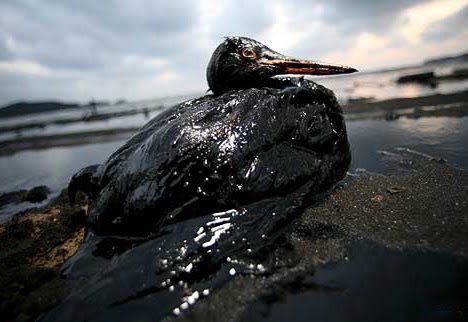 Something to say when you, or someone you know, has totally exterminated a species.
"All the penguins are dead!"
"GILGONGO!"
from Urban Dictionary.
Thursday, June 3, 2010
Caution!!
 Designer Nicolas Lampert and printer Dan S. Wang recently collaborated on a print to voice their opposition to the Arizona Immigration Bill SB-1070. The print references the look and the phrasing of a 1851 broadside that was created in resistance to the Fugitive Slave Act of 1850 alerting fugitive slaves and citizens to have a “Top Eye” open for the police who were empowered to detain all “suspected” escaped slaves.
Prints are free if you live in Arizona and are available for sale here if you live elsewhere, though most of the edition has already been hung in the streets of AZ.
The poster reads:
CAUTION!!
MIGRANT WORKERS Of ARIZONA, one & all,
You are respectfully CAUTIONED and advised, to avoid conversing with the Watchmen, Police Officers, and INS Agents of ARIZONA, For since the recent order of Governor Brewer who signed SB-1070, they are empowered to act as
KIDNAPPERS,
JAILERS,
AND
DEPORTERS,And they have made it a crime to be undocumented in Arizona. They have also been empowered to stop and interrogate every individual in the state regardless of their citizenship status to check for documents. Therefore, if you value your LIBERTY, and the welfare of migrant workers, Shun them in every possible manner and resist the climate of xenophobia in Arizona and beyond.
Keep a Sharp Look Out for
KIDNAPPERS, and have
TOP EYE open.

Monday, December 28, 2009
Printed Matter
Sigh. Back from vacation, and slow to take up the heavy reigns of blogging. Quel trevail!
It doesn't help matters that I felt blessed to be away from the internets for a few weeks, and got reacquainted with the world of lengthy literature for the first time since the birth of baby Nico.
Waiting on my doorstep when I returned, helping to ease the transition, were two fantastic printed journals that brilliantly and deliberately illustrate the vast distances between browsing internet posts and reading large and thoughtful printed articles. McSweeney's issue #33 has been praised far and wide, but it bears repeating here. The current issue of the quarterly magazine is a huge and gorgeous riff on a daily newspaper. The large format "San Francisco Panorama" has extensive news, sports, arts and books sections, plus 16 pages of full-color comics from the likes of Chris Ware, Dan Clowes and Art Spiegelman. McSweeney's commissioned new journalism from William Vollman and Andrew Sean Greer, sports writing from Stephen King, new fiction from George Saunders and Roddy Doyle, dispatches from Afghanistan, and much more besides. It was available on the streets of San Francisco for a single day, and is now available in bookstores and online. Buy it. Read it. Hold on to it.
 Less lavishly praised, but equally ambitious, is the latest issue of Coilhouse. Coilhouse was conceived as a daily "love letter to alternative culture" which quickly spun off a glossy print edition to cover the stories which couldn't be fully explored in the blog format. Issue #4 of the magazine, lovingly produced and published by photographer Nadya Lev, artist Zoetica Ebb, and musician Meredith Yayano, features a photo essay on "The Tarnished Beauties of Blackwell, Oklahoma," dozens of portraits of long-grown, long-dead children of pioneer America; a lengthy interview with Alejandro Jodorowsky, the filmmaker behind The Holy Mountain and Santa Sangre; and paper dolls from cartoonist Dame Darcy. Available only through the Coilhouse website, right here.
Both of these documents are pointed and beautiful demonstrations of all the great things that printed periodicals can do and the internet simply can't. Well worth your money and time.
Tuesday, June 23, 2009
Get Pona!
 Linguist Arika Okrent has been making the rounds of brainy talk shows promoting her book "In the Land of Invented Languages," a fascinating historical survey of artificial languages from the medieval visions of Hildegard von Bingen, to the 20th century invention of Klingon. The book looks to be both profoundly erudite and highly entertaining, which is why the University of Chicago asked her to share her ten favorite made-up words on their blog.
Among Okrent's favorites are "radíidin," from Suzette Haden Elgin's language Láadan, a language designed to capture the unique perspective of women. The word means "non-holiday, a time allegedly a holiday but actually so much a burden because of work and preparations that it is a dreaded occasion; especially when there are too many guests and none of them help."
The word "pona" comes from Sonja Elen Kisa's language Toki Pona, a minimal language with only 118 words. Pona can be a verb ("improve," "fix," "repair," "make good"), an adjective ("good," "simple," "positive," "nice," "correct," "right"), a noun ("goodness," "simplicity," "positivity"), or an interjection ("great!", "cool!" "yay!")
More here.


